
Every hire, on one slate.
HiringSlate keeps the candidates for a role in one place: the resumes, the panel's notes and questions, independent scorecards, and a side-by-side view when it is time to decide. Without a heavy applicant tracking system.
Free during early access. Built for hiring managers, small teams, agencies and staffing firms.
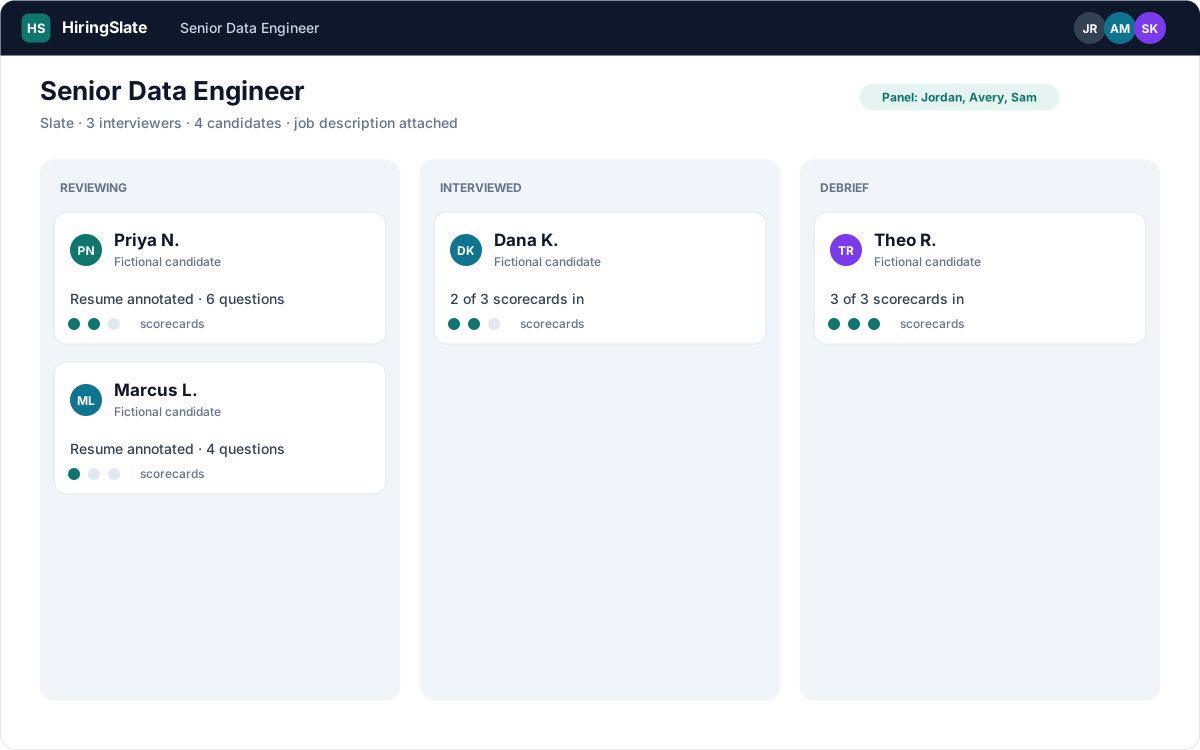
Four steps from job description to decision
A slate is one role and the people being considered for it. Everything the panel does for that hire lives there.
Create the slate
Add the job description and invite the interviewers. Each gets a link and signs in; nobody else can open it.
Add resumes and annotate
Upload each candidate's resume, read it as a PDF, and mark it up with notes for yourself or for the panel.
Interview with a plan
Go into the call with questions tied to this resume and this job, then fill in a scorecard while it is fresh.
Compare and decide
See every scorecard side by side, read a summary that quotes the panel, and make the call yourselves.
Everything between "we have candidates" and "we made a good decision"
Annotate the resume
Highlight a line, attach a note, and choose who sees it: just you, or the whole panel.
Questions worth asking
Suggestions drawn from gaps between the resume and the job. Every interviewer keeps and edits their own list.
Independent scorecards
Criteria rated 1 to 4 with the evidence behind each rating. Others' feedback opens only after yours is in.
Compare the slate
Every candidate and every interviewer side by side, with the splits that need a conversation called out.
Invite the panel
Invite links for each interviewer. Sign-in is required and nothing is ever public.
Candidate data under control
Retention per slate, deletion on request, and access limited to the people you invited.
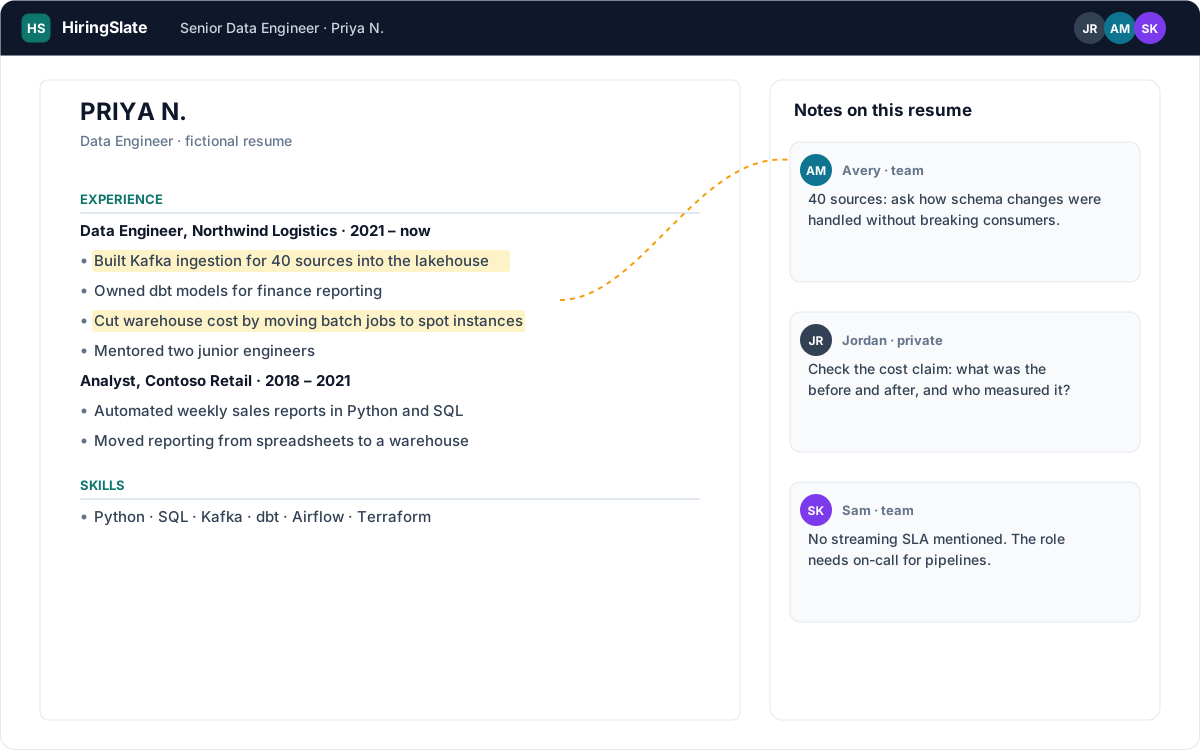
Read the resume together, without a group chat
Most panels review a resume in parallel and never compare notes until the debrief. On a slate, the notes sit on the resume itself, next to the line they are about.
- Highlight a line and attach a note
- Private notes for your own preparation, team notes for the panel
- Claims to check become questions for the call
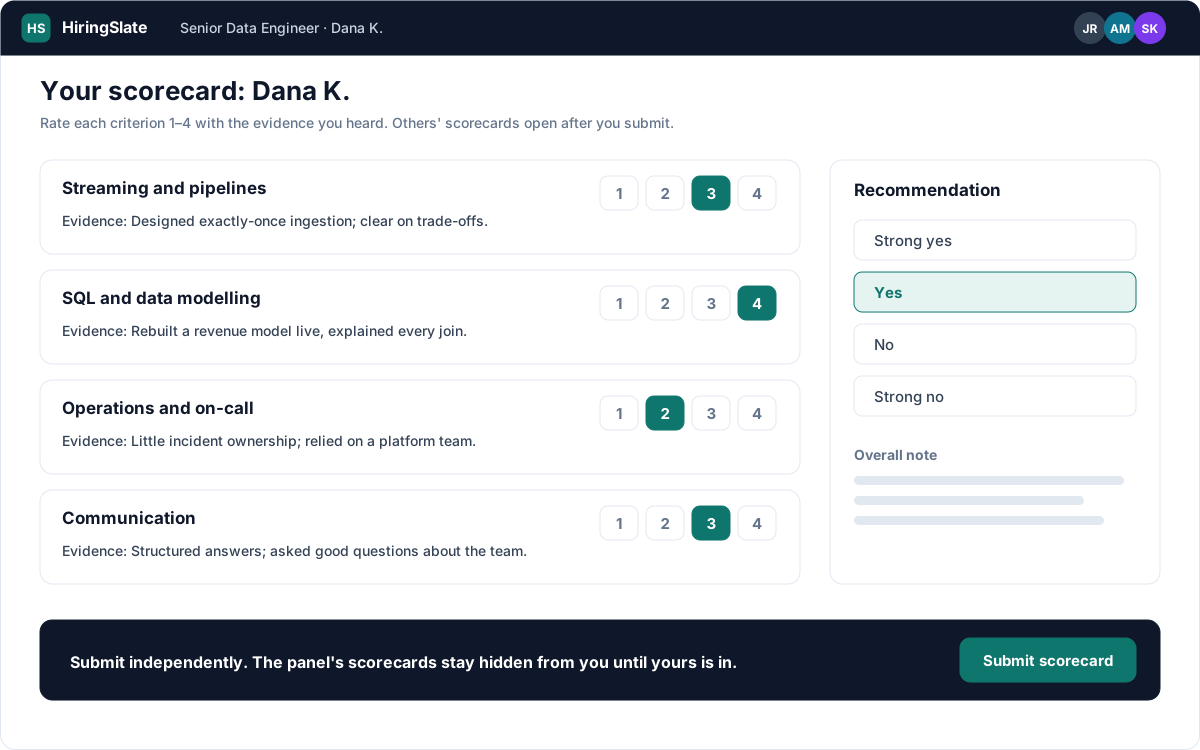
Feedback that isn't an echo of the first opinion
When interviewers hear each other's views before writing their own, the first opinion tends to win. HiringSlate keeps every scorecard sealed until its author submits, so each one stands on its own evidence.
- Criteria from the job, rated 1 to 4
- Evidence required for every rating
- A recommendation from each interviewer
Where the AI stops, on purpose
Hiring decisions affect people's lives, and in some places automated tools that score candidates are regulated. These are the rules HiringSlate is built on.
It suggests questions
From gaps between a resume and the job, for the interviewer to keep, change or discard. The interviewer owns the list.
It summarises what people wrote
The panel summary quotes the scorecards and points out where interviewers disagree. It adds no opinion of its own.
It never scores, ranks or decides
No candidate scores, no match percentages, no shortlist made by a model. Why we drew the line here
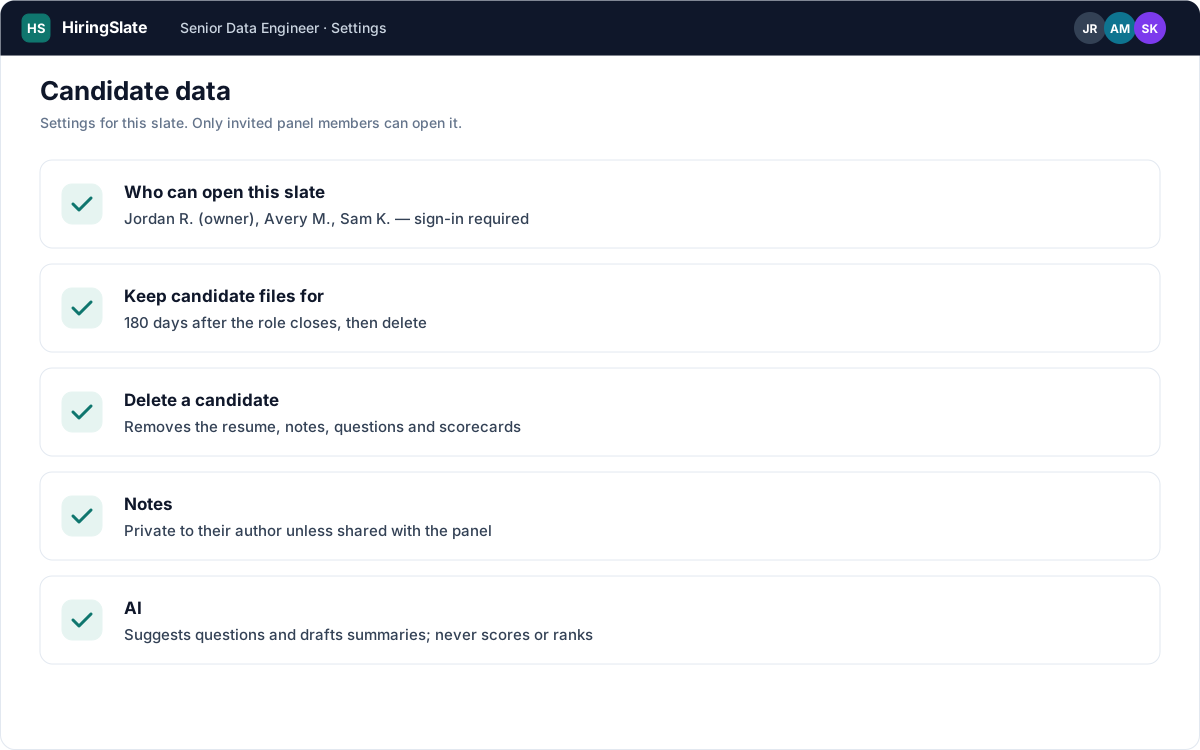
Candidate data, handled like it belongs to someone
A resume is a person's history, shared for one purpose. HiringSlate keeps it inside the slate it was added to and gives you the controls to keep only what you need.
- Only invited panel members can open a slate; sign-in is always required
- Retention per slate, and deletion of a candidate in one step
- Notes stay private unless their author shares them with the panel
Practical guides for fairer, better-run interviews
Why independent scorecards beat the debrief where the first opinion wins
Panels interview to get several views of a candidate, then often merge them into one before anyone writes anything down. Structured criteria and scorecards submitted independently keep the views separate long enough to be useful.
How to annotate a resume before an interview, so the call has a plan
Ten minutes with a resume and a highlighter turns a general chat into a conversation that tests what matters for the role. Here is a simple method, and how to share it with the rest of the panel.
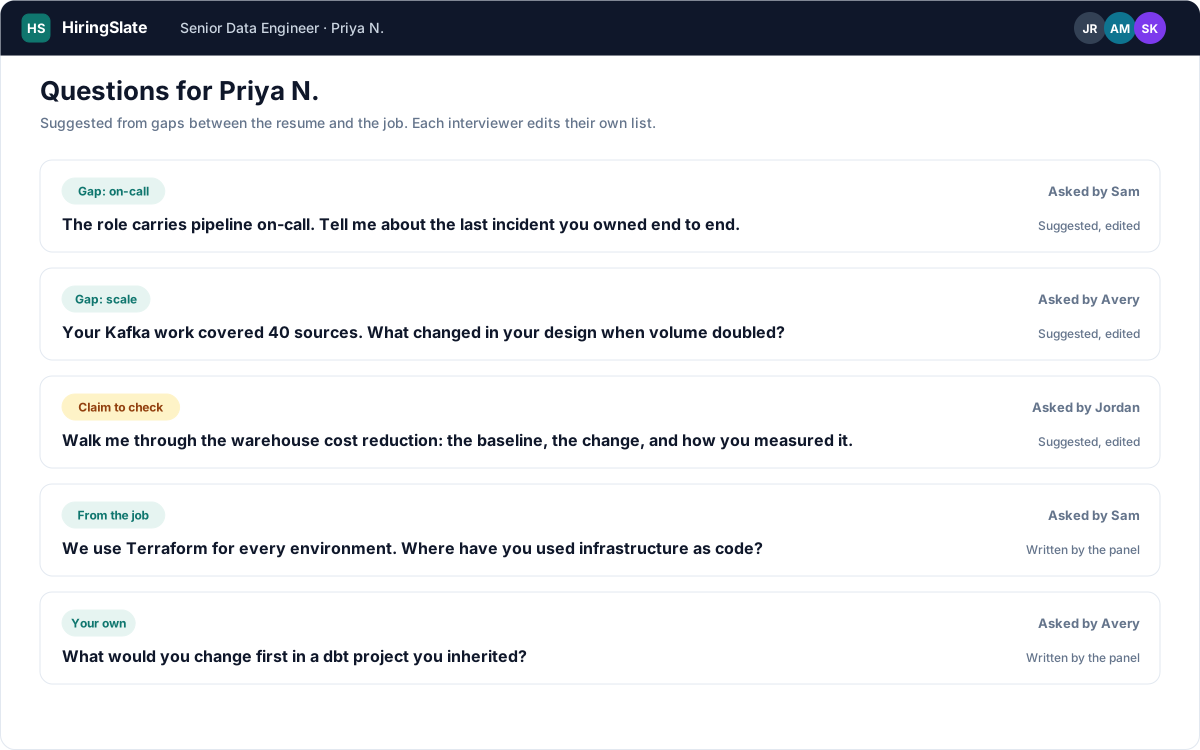
Writing interview questions from the gaps between a resume and the job
The most useful questions come from where a resume and the job description don't meet. How to find those gaps, turn them into fair, answerable questions, and avoid the ones that tell you nothing.
Run your next hire from one slate
Create a slate for the role, invite your panel and add the first resume. Free while HiringSlate is in early access.