Most interviewers read a resume twice: once when it arrives, quickly, and once in the five minutes before the call. The second read is usually spent remembering who the person is rather than deciding what to ask. The result is a pleasant conversation that covers what the candidate chooses to talk about, which is not always what the role needs.
Annotating fixes that. It is not a long exercise. With the job description beside you, it takes about ten minutes per resume, and it leaves you with a short list of things you actually want to find out.
Read with the job, not just the resume
A resume on its own invites a general impression: impressive, junior, scattered. Read beside the job description, it answers a narrower and more useful question: where does this person's evidence meet what the role needs, and where doesn't it?
Before you start, pick out the four to six things the role genuinely requires. If your panel uses criteria on its scorecards, use those. Everything you mark should relate to one of them.
Four kinds of marks
| Mark | What it means | What it becomes |
|---|---|---|
| Strong evidence | A line that clearly shows a requirement, with specifics | A question to go deeper: how, why, what would you change |
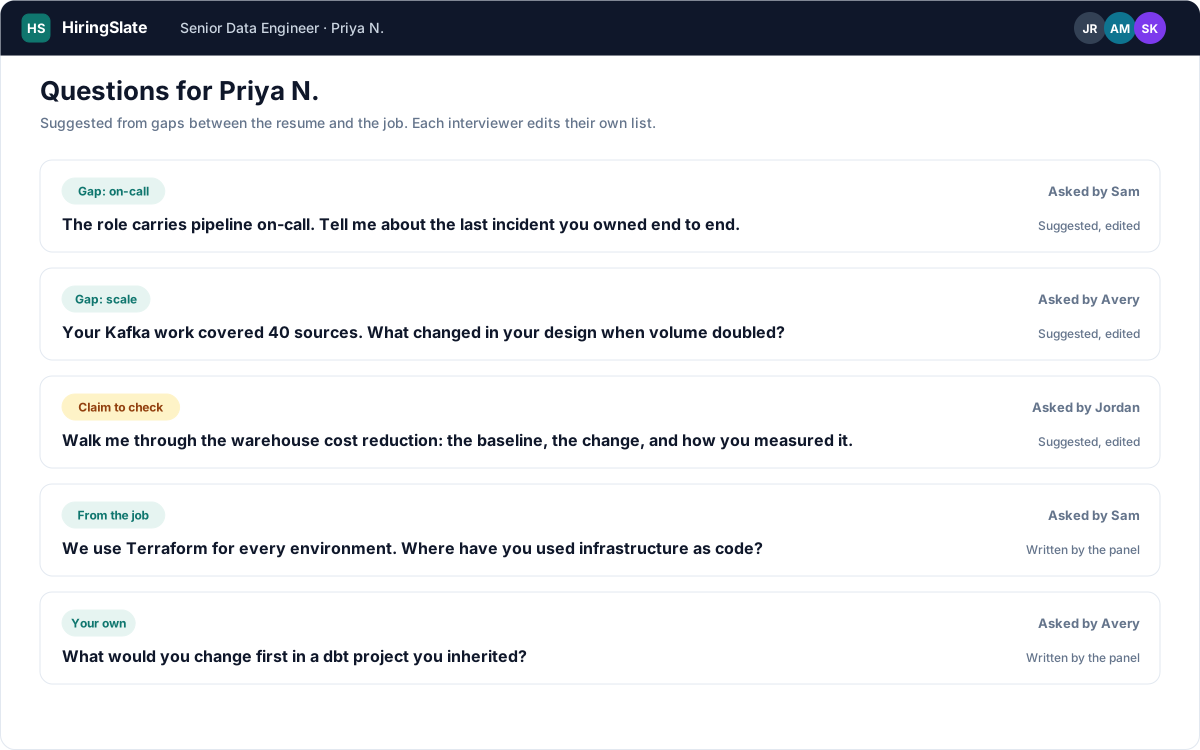
| A claim to test | A result or number that matters and needs context | A question about the baseline, the method and their part in it |
| A gap | A requirement the resume does not mention at all | An open question; absence on paper is not absence in fact |
| Context to understand | A short tenure, a change of direction, a period not covered | A neutral question, only if it matters for the role |
Mark claims, not people
Annotate what the resume says and what the job needs. Notes about someone's age, background, accent or anything unrelated to the work do not belong on a resume or a scorecard, and in many places using them is unlawful.
Write the note you will need on the call
A highlight on its own is forgettable. The note beside it should say what you want to find out, in a form you can use in the conversation.
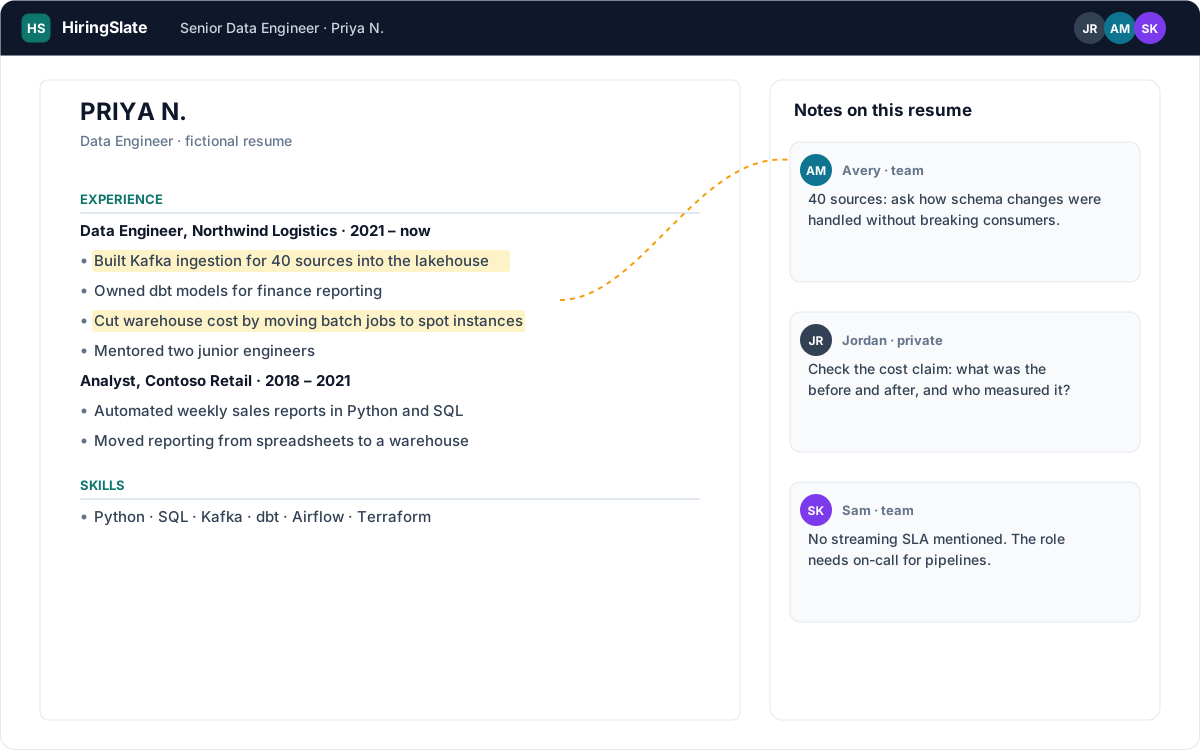
Cost savings?
Says warehouse cost was cut by moving batch jobs to spot instances. Ask: what was the bill before and after, who measured it, and what did they personally build?
Good notes are short, specific and written as a question or a thing to check. If you cannot turn a mark into a question, it probably does not need a mark.
Private notes and team notes
Some notes are for you: reminders, half-formed doubts, the order you want to ask things in. Others help the whole panel: a claim several people should probe, or a requirement nobody has evidence for yet. Keeping the two apart matters.
- Private for preparation and first impressions you have not tested yet. They should not shape a colleague's view before they meet the candidate.
- Team for coverage: "nobody has seen evidence of on-call yet" or "I'll take the system design question".
In HiringSlate each note is private to its author unless they choose to share it with the panel, and every note stays attached to the line it is about.
A ten-minute method
- Read the job's requirements and write the four to six that matter most.
- Read the resume once without marking anything, to get the shape of the career.
- On the second read, mark strong evidence, claims to test, gaps and context, each against a requirement.
- Turn each mark into a note phrased as a question or a check.
- Choose the three or four that matter most for your part of the interview.
- Share the notes that help the panel's coverage; keep the rest private.
After the interview
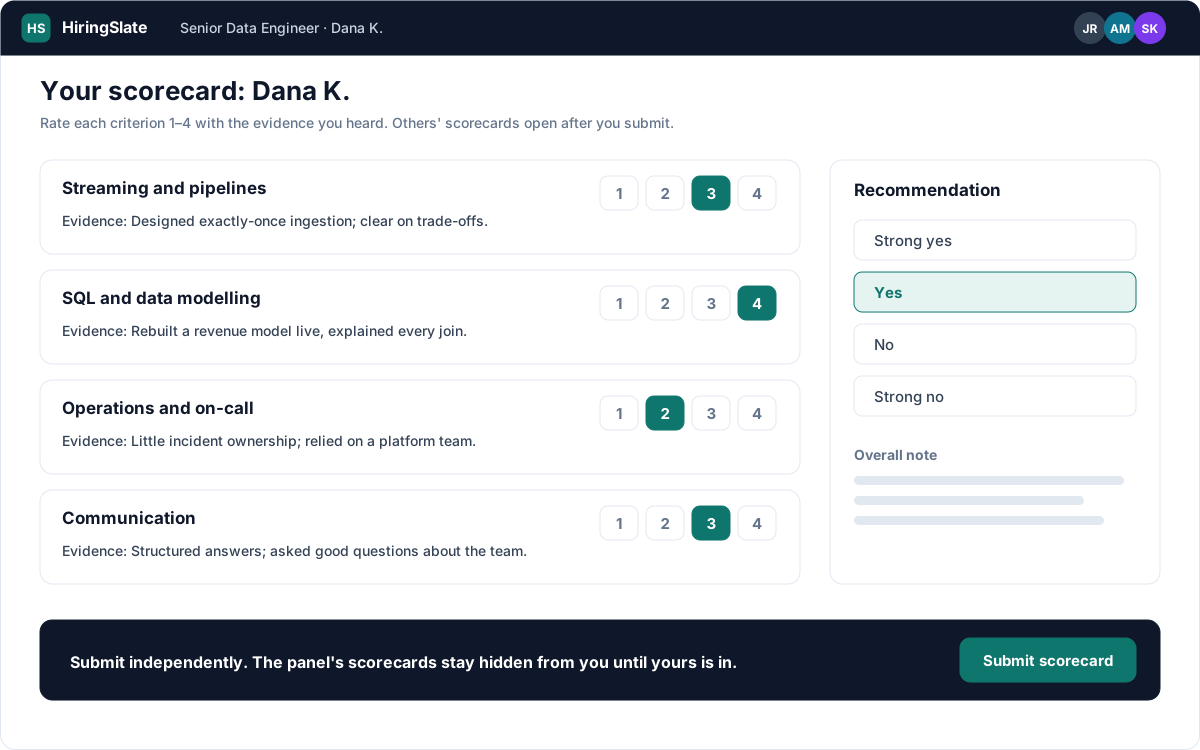
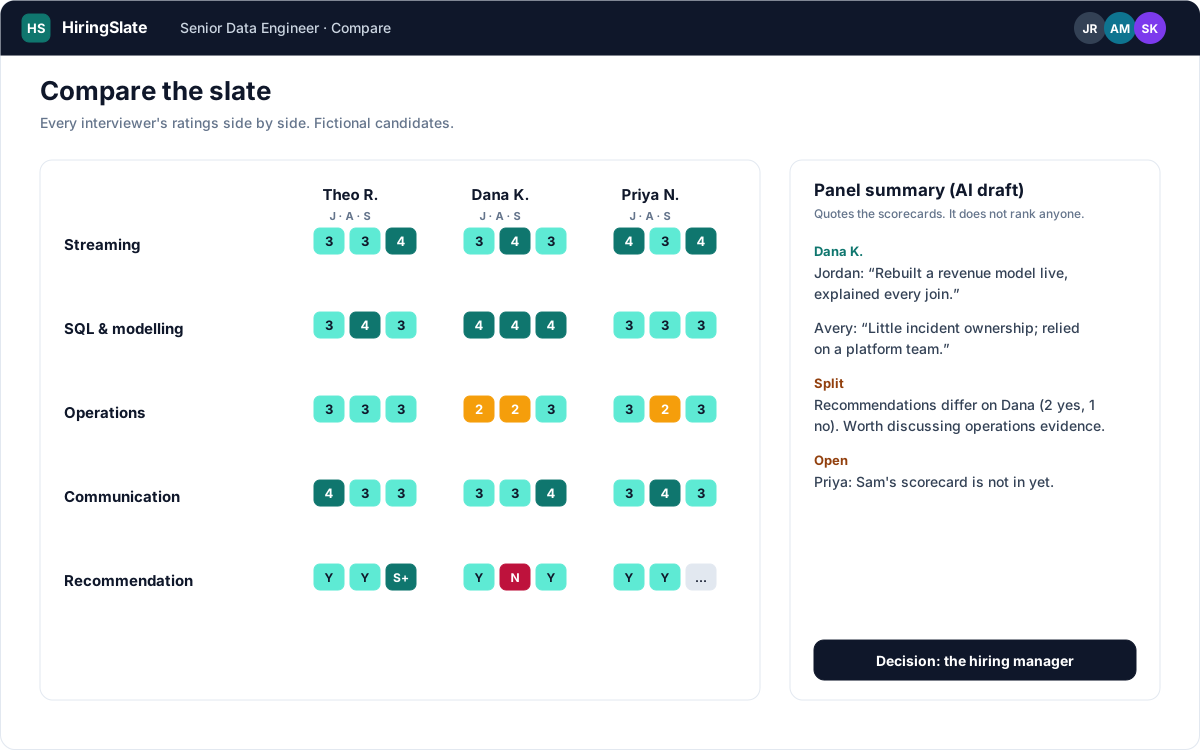
Your annotations are also your memory. When you write the scorecard, look back at them: did the conversation confirm the strong evidence, explain the claim, fill the gap? That is the evidence the scorecard needs. Write it before you read anyone else's feedback.
- Every mark relates to a requirement of the role.
- Every note is a question or a check, not a verdict.
- Nothing in your notes refers to personal characteristics.
- Notes that would bias a colleague are private.
- You know which three or four things you most need to learn.
Annotate for the conversation you need, not the impression you formed.
Run your next hire on one slate
Create a slate for the role, invite your panel and add the first resume. Free during early access.
Start a slate