Every hiring product now has an AI story, and many of them are the same one: let the model read the resumes and tell you who is best. It is an appealing promise for a busy team, and it is the part of AI in hiring that worries regulators, lawyers and candidates most.
There is a lot of useful work AI can do for an interview panel without deciding anything about anyone. This post sets out where we think the line is, why we drew it there in HiringSlate, and what the law already says about the other side of it.
Assisting people versus deciding about people
| The AI... | Example | Who decides |
|---|---|---|
| Prepares | Compares a resume with the job and lists gaps worth asking about | The interviewer, who keeps or discards each suggestion |
| Drafts | Suggests interview questions for a person to edit | The interviewer |
| Summarises | Quotes what each interviewer wrote and points out disagreements | The panel |
| Scores | Gives each candidate a number or match percentage | Effectively the model |
| Ranks or screens | Orders candidates, or filters some out before a person sees them | Effectively the model |
The first three make people faster at work they remain responsible for. The last two substitute the model's judgement for theirs, even when a person nominally approves the result. A ranked list or a score is hard to ignore; in practice it frames everything that follows.
What the law already says
Regulation of AI in hiring is moving quickly and varies by place. A few landmarks are worth knowing:
- New York City Local Law 144 regulates "automated employment decision tools": tools that substantially assist or replace human decision-making in hiring or promotion, such as by scoring or ranking. Since enforcement began in July 2023, employers using one for candidates in the city need an independent bias audit within the past year, a published summary of it, and advance notice to candidates.
- The EU AI Act classifies AI systems used for recruitment and selection, including analysing and filtering applications and evaluating candidates, as high-risk, with obligations for risk management, human oversight, transparency and record-keeping.
- The GDPR (Article 22) gives people the right not to be subject to decisions based solely on automated processing that significantly affect them, with limited exceptions.
- US anti-discrimination law applies to selection tools whatever they are made of. The US Equal Employment Opportunity Commission has said employers can be responsible for adverse impact caused by algorithmic tools they use, including tools bought from vendors.
Not legal advice
This is a summary of well-known rules, not a complete picture. Other states and countries have their own, and the rules are changing. If you use any tool that scores or screens candidates, get advice for the places where you hire.
Why scoring is the hard part
A model that scores candidates learns from data about past candidates and past decisions. If those decisions reflected bias, or if the features it relies on correlate with protected characteristics, the scores can carry that bias forward at scale, and in a form that looks objective. Explaining why one candidate scored 71 and another 68 is often impossible.
Even a well-built scoring model changes the panel's behaviour. Interviewers who know a candidate's score ask different questions and remember different answers. The score becomes the anchor.
Where we drew the line in HiringSlate
HiringSlate's AI does three things, each of which leaves a person in charge:
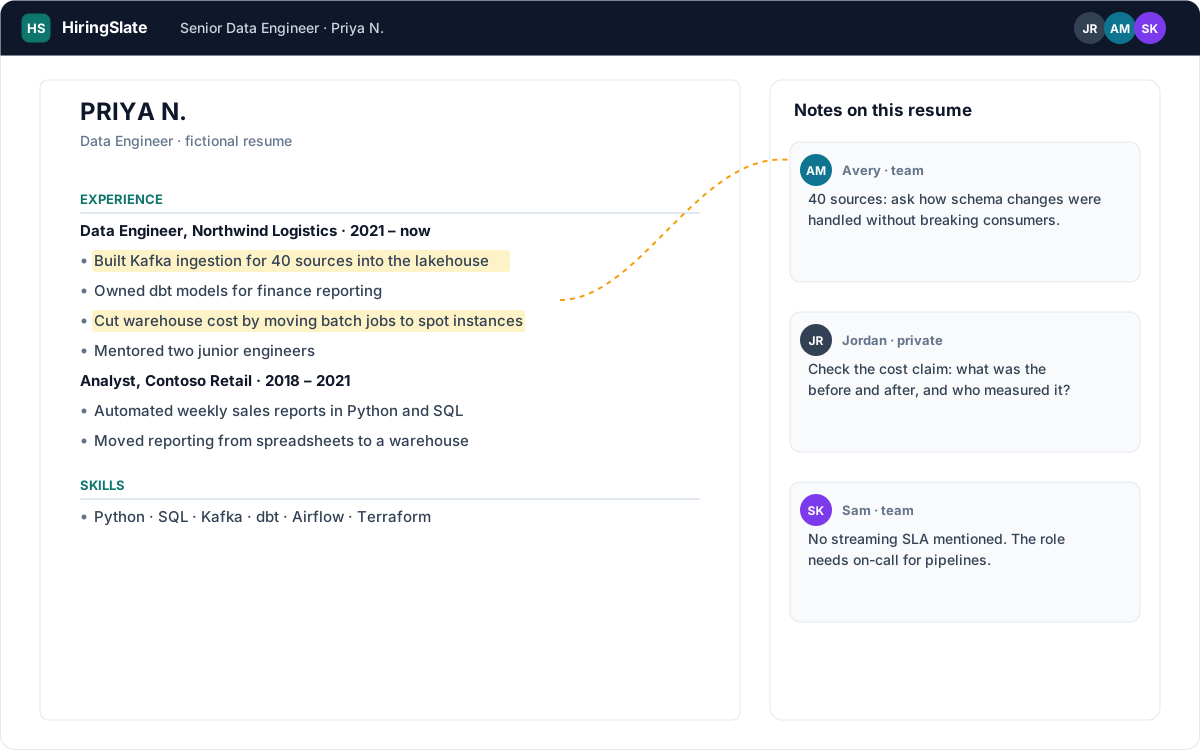
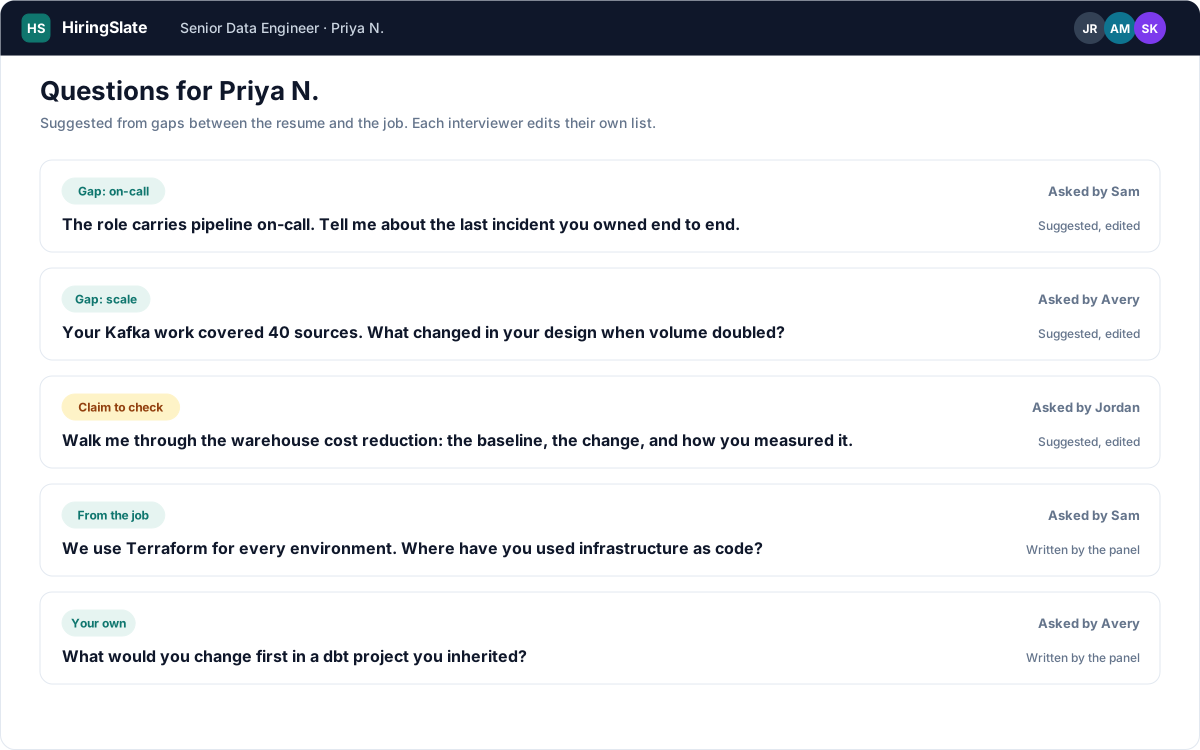
- It suggests questions from gaps between a resume and the job. Each suggestion says where it came from; the interviewer keeps, edits or discards it.
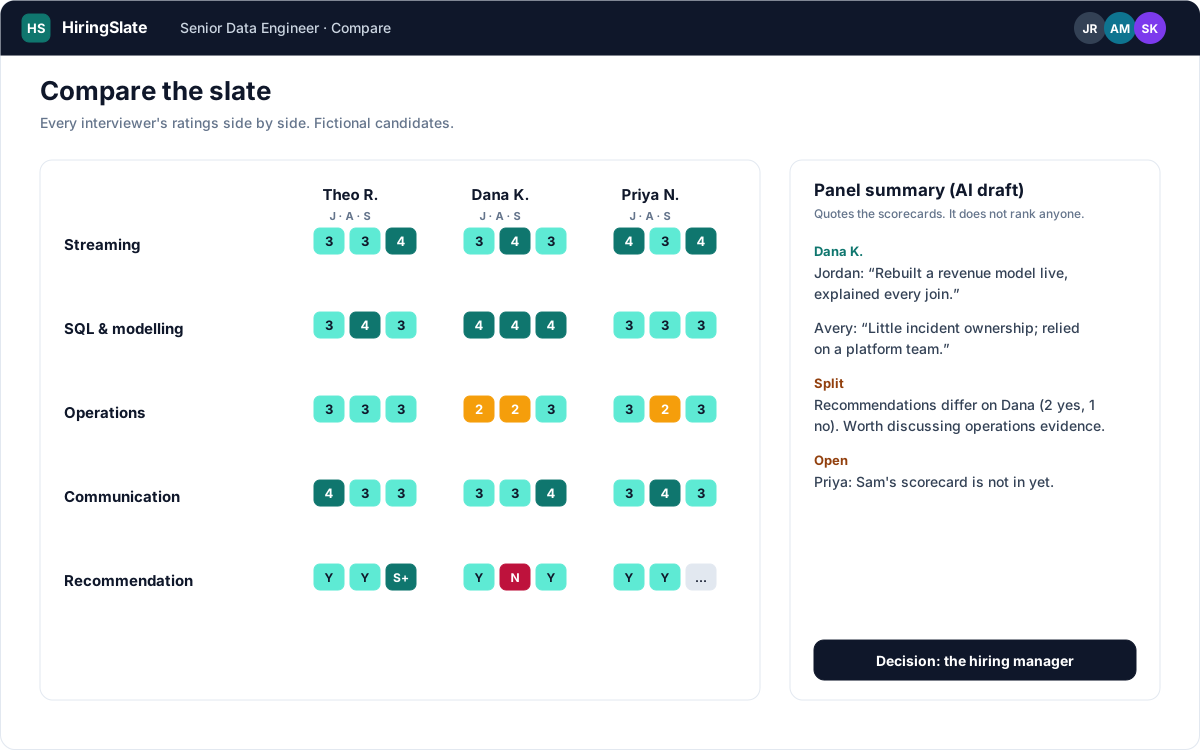
- It summarises the panel's feedback after scorecards are submitted, attributing every point to the interviewer who wrote it and calling out where they disagree.
- It never scores, ranks, screens or recommends. There is no match percentage, no ordering of candidates by the model, and no automatic rejection.
Dana K.: 82% match. Recommended.
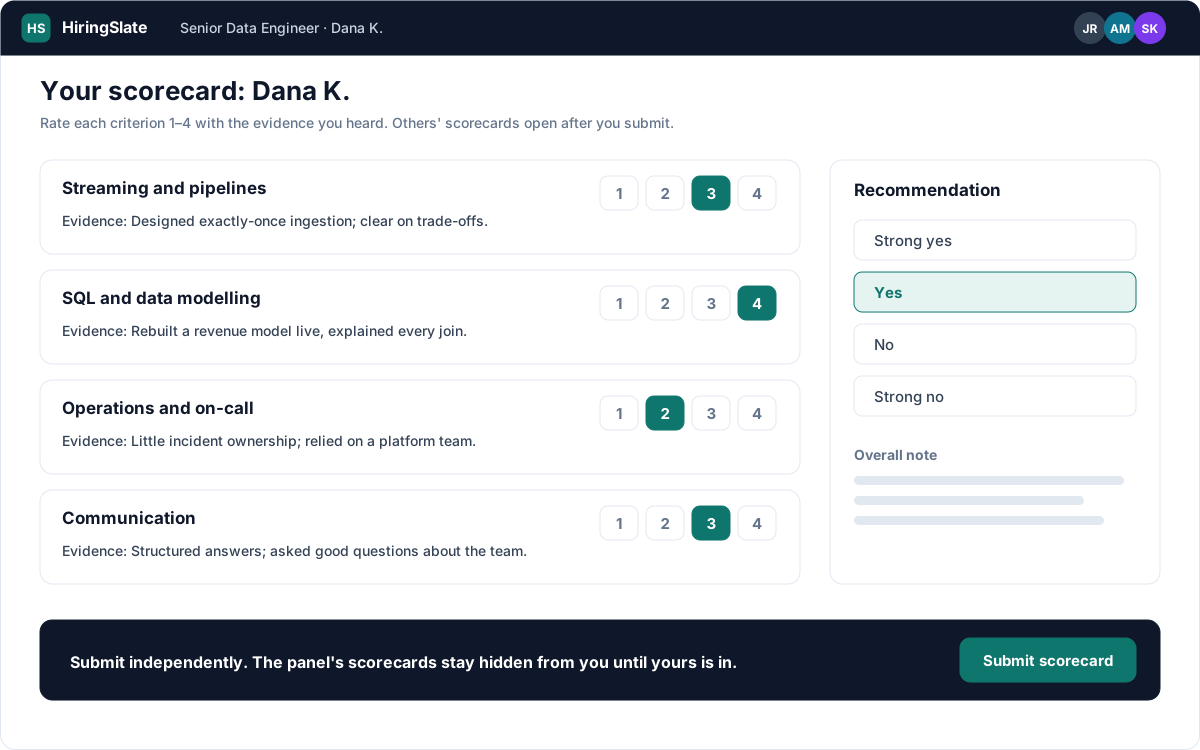
Dana K.: Jordan rated SQL 4: "rebuilt a revenue model live". Avery rated operations 2: "relied on a platform team". Recommendations split 2 yes, 1 no.
The second is less convenient and far more useful. It keeps the evidence and the disagreement visible, and it leaves the decision with the people who met the candidate.
Questions to ask any hiring tool
- Does it score, rank, filter or recommend candidates? If so, has it had a bias audit, and can you see it?
- Can a person see why it produced each output?
- Is candidate data used to train its models, yours or anyone else's?
- Can you turn the AI off and still use the product?
- Who is responsible if it produces a discriminatory result? (The answer is usually: you.)
We think the most valuable AI in hiring makes good process easier: better preparation, better questions, better records of what people saw. The judgement about another person is the part worth keeping human.
Let AI do the preparation and the paperwork. Leave the judgement about people to people.
Run your next hire on one slate
Create a slate for the role, invite your panel and add the first resume. Free during early access.
Start a slate