
What a slate holds, and what the panel can do with it
HiringSlate is deliberately small: the work of a hiring panel, from the first resume to the decision, and nothing that turns it into an applicant tracking system.
One room per role
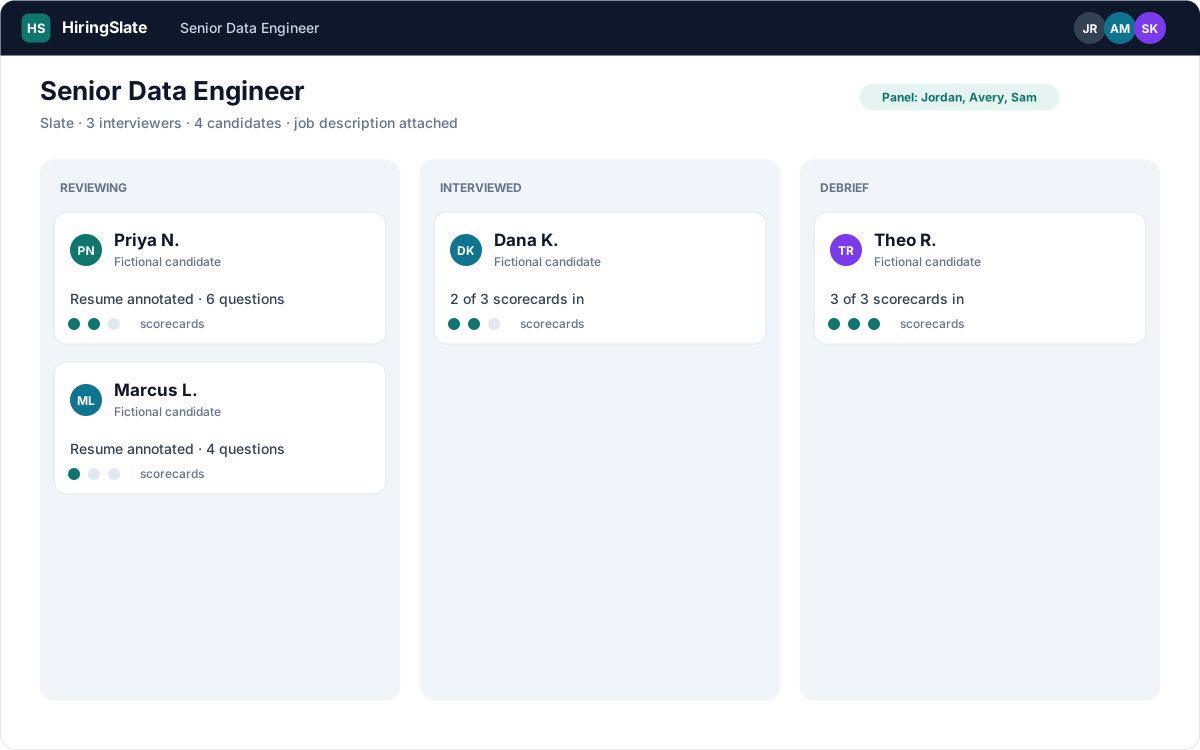
A slate is a role and the people being considered for it. It holds the job description, the panel, the candidates and everything written about them.
- Group candidates by stage: reviewing, interviewed, debrief
- See at a glance whose scorecards are still missing
- Close the slate when the role is filled; retention starts from then
Invite interviewers, not the internet
Each interviewer gets an invite link to the slate. Opening it requires signing in with that email address, so a forwarded link does not open the candidates to anyone else.
- Roles: the owner manages the slate, interviewers review and give feedback
- See which questions a colleague already plans to ask
- Remove someone and their access ends at once
Notes that sit next to the line they are about
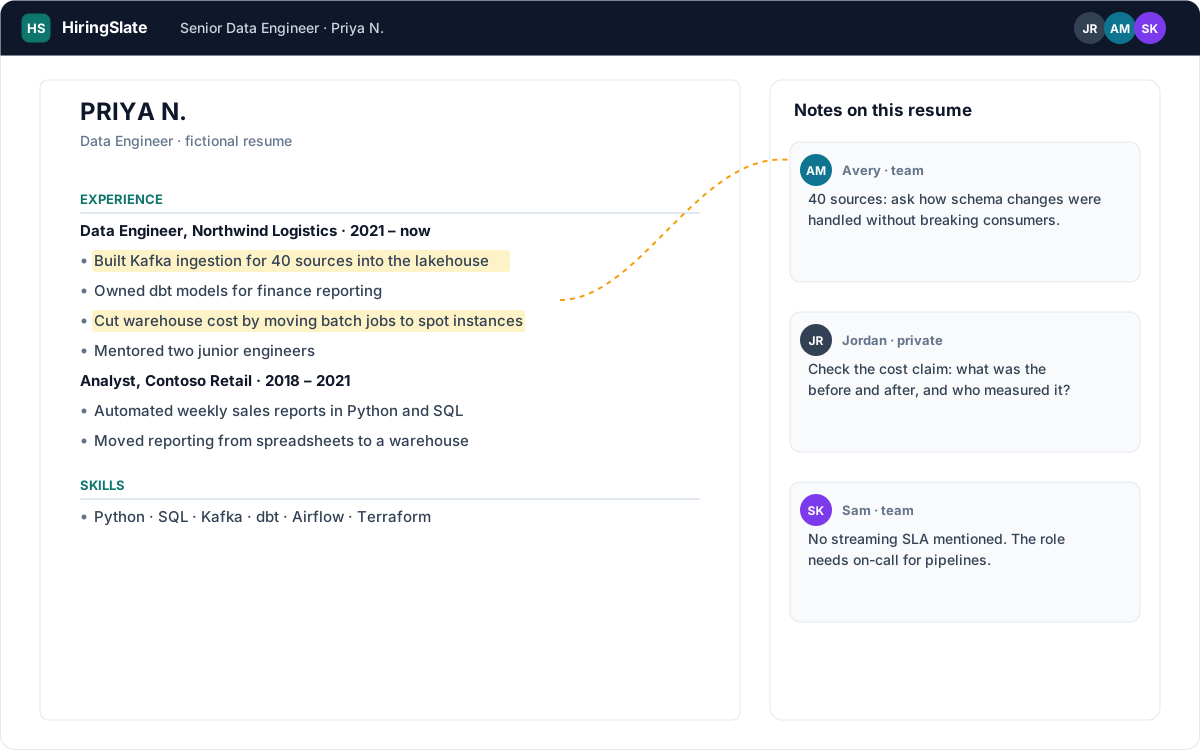
Upload a candidate's resume and read it as a PDF in the browser. Select a line, highlight it, and attach a note.
- Private notes for your own preparation; team notes for the panel
- Every note is anchored to the text it is about
- A claim worth testing becomes a question for the call
A plan for each conversation
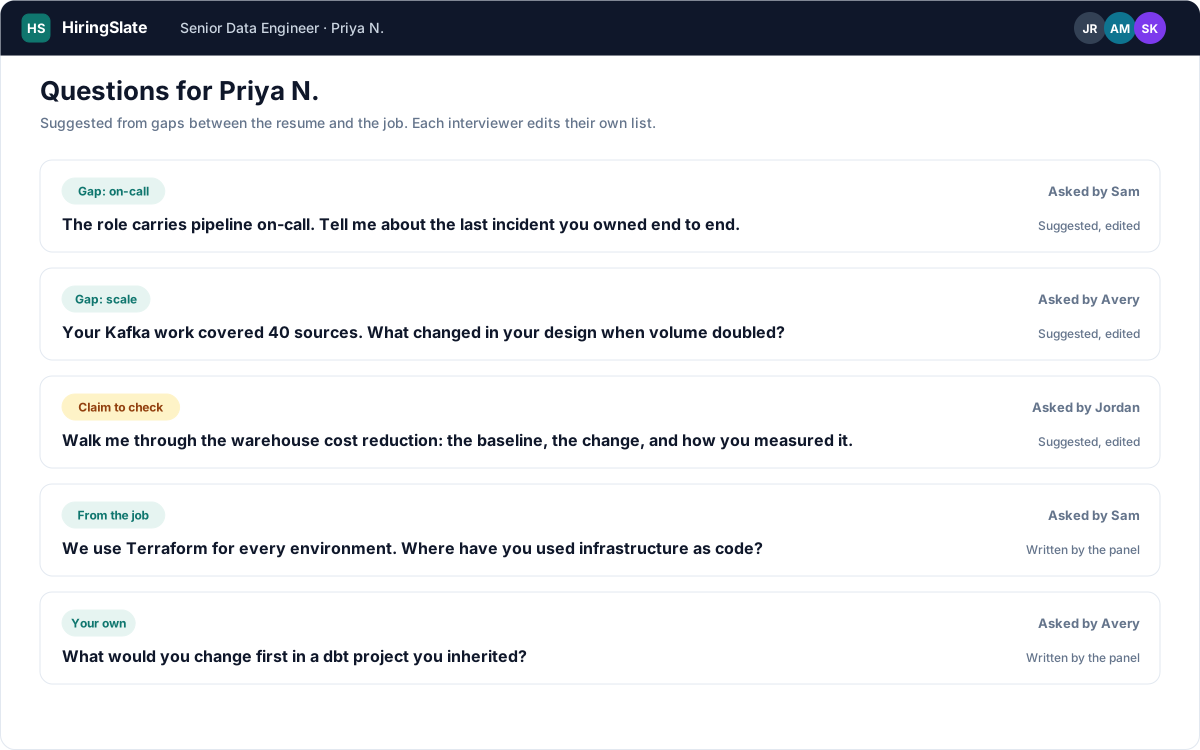
HiringSlate compares the resume with the job description and suggests questions where they do not meet: a requirement the resume does not mention, a claim worth testing, a gap in dates worth understanding.
- Suggestions are a starting point; each interviewer edits their own list
- Questions are tied to the job's requirements, not to personal traits
- Write your own alongside the suggestions
Structured, evidenced, independent
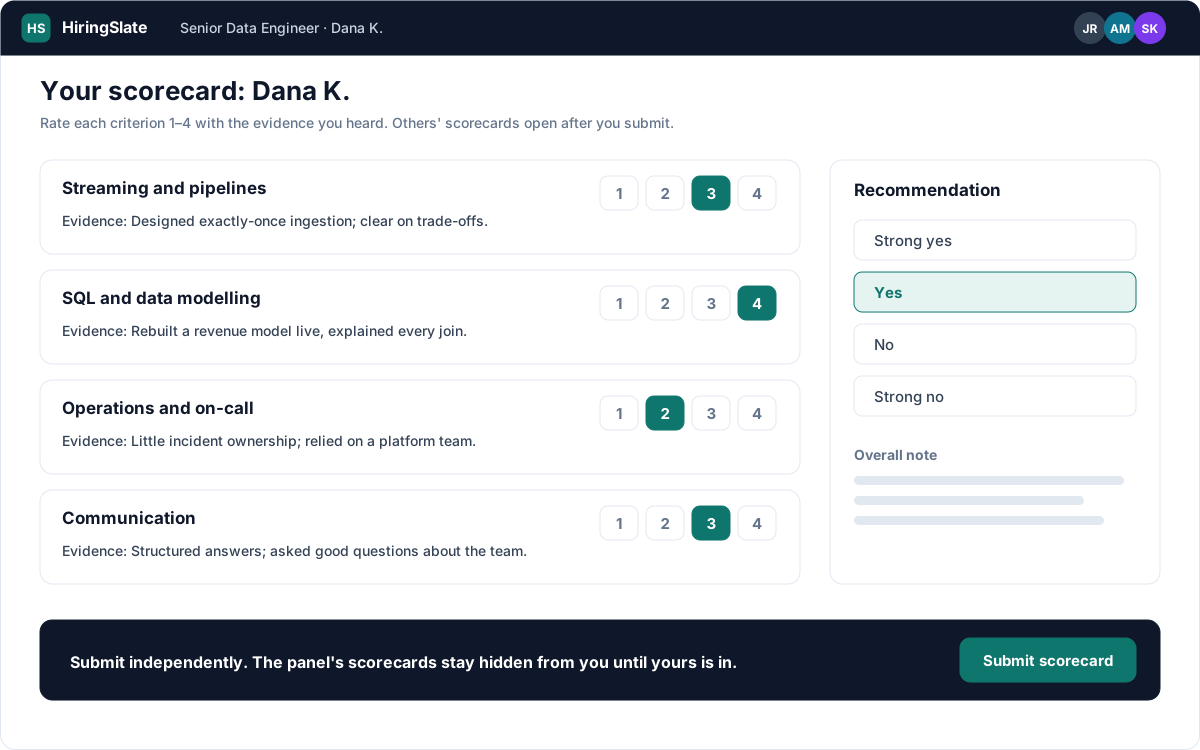
The slate's criteria come from the job. After each interview, the interviewer rates every criterion from 1 to 4, writes the evidence they heard, and makes a recommendation.
- Every rating has room for the evidence behind it
- Others' scorecards stay hidden until you submit yours
- A recommendation from each interviewer, in their own words
The whole slate, side by side
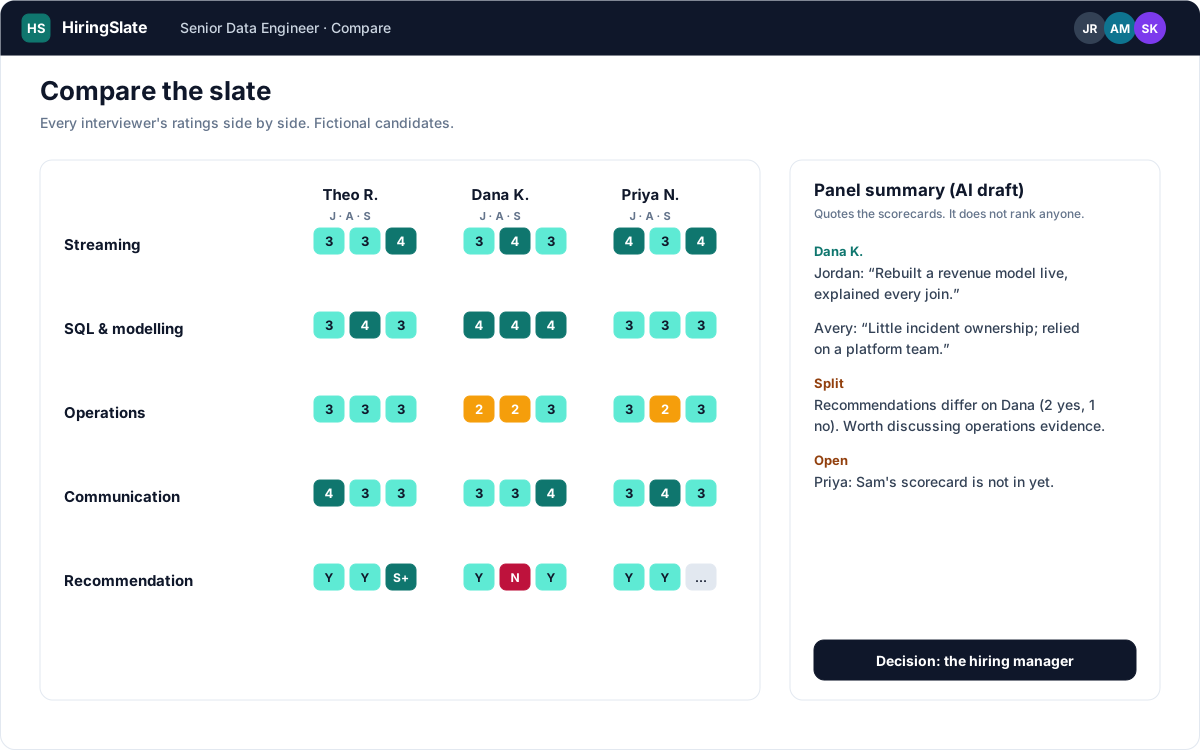
When the scorecards are in, the compare view shows every candidate against every criterion, with each interviewer's rating visible rather than averaged away.
- Disagreements are called out so the debrief starts with them
- A panel summary drafted from the scorecards, quoting the interviewers
- No overall score and no ranking: the decision is the hiring manager's
Keep what you need, for as long as you need it
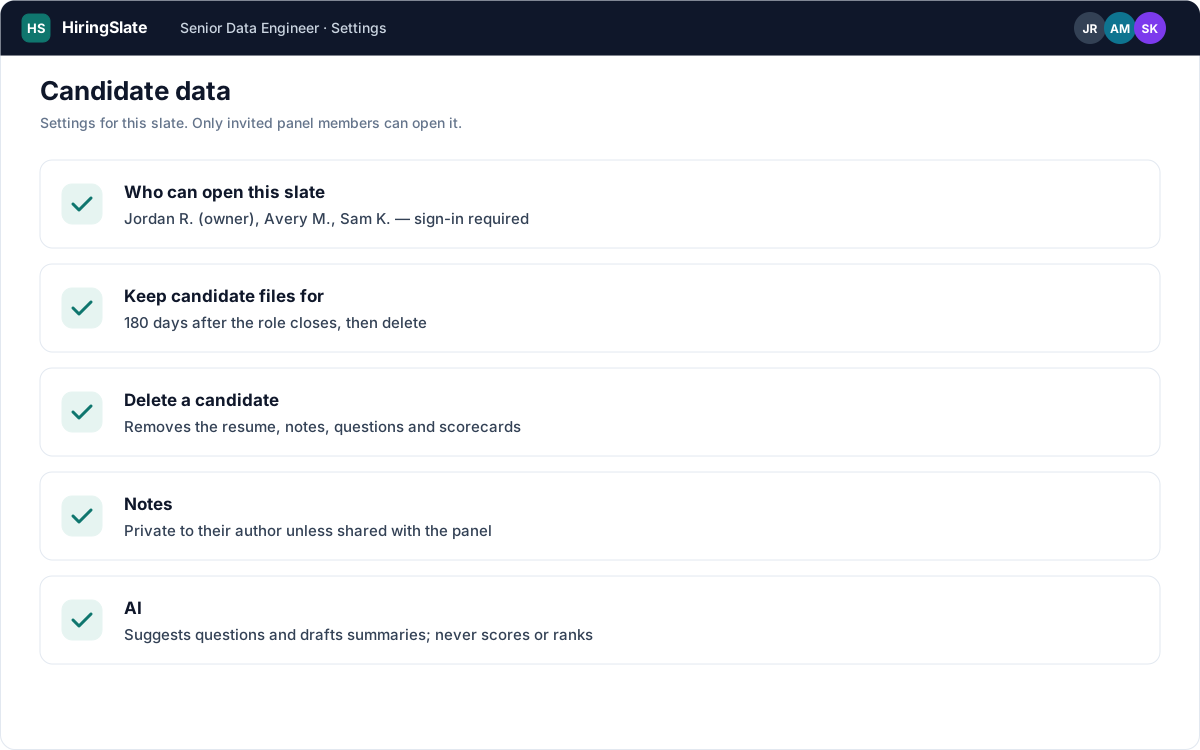
The people on a slate did not sign up for HiringSlate; their information was shared with you for one hiring decision. The controls reflect that.
- Retention per slate, counted from when the role closes
- Delete a candidate and their resume, notes, questions and scorecards go with them
- Only invited panel members can open the slate, and only after signing in
Run your next hire from one slate
Create a slate for the role, invite your panel and add the first resume. Free while HiringSlate is in early access.